Wireless companies are boosting monthly fees and increasing the cost of mostly older cellphone plans
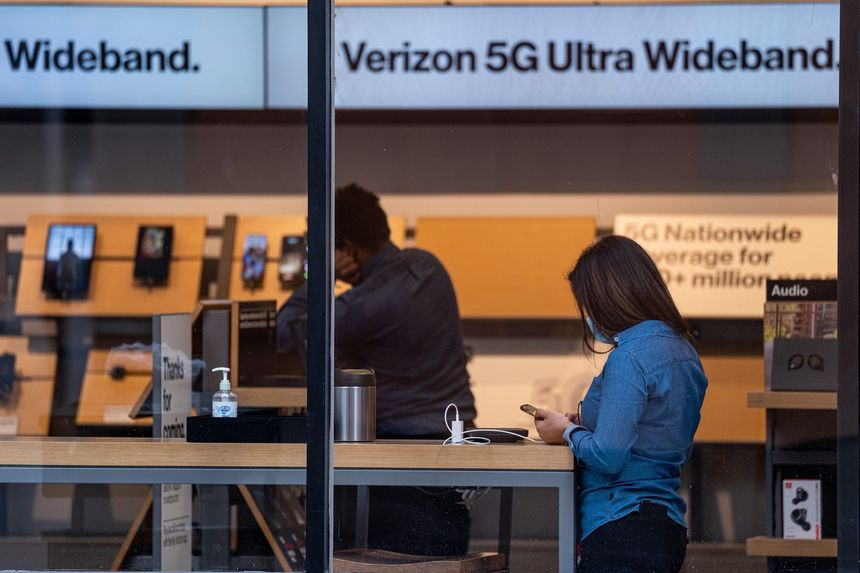
This summer will test whether Americans already absorbing surging costs for fuel and food can also shoulder the burden of costlier cellphone service.
Wireless companies have spent the past month boosting fees and raising the cost of some midrange wireless plans. Industry executives say that consumers already numbed to surging prices for other necessities might absorb slightly higher rates instead of switching providers or dropping service.
AT&T Inc. starting in June, raised the cost of its older wireless plans by up to $6 for single lines and $12 for family plans, encouraging subscribers to adopt newer unlimited data plans.
Verizon Communications Inc. later matched AT&T with a $6 or $12 monthly price increase on its metered-data plans. It also raised some monthly fees on consumer wireless plans by $1.35 and levied a monthly per-smartphone fee of up to $2.20 on many business plans.
Verizon consumer group chief Manon Brouillette said that consumers are worried about the economic environment but the cellphone carrier remained confident in its prices because its customers value its reliable network.
T-Mobile US Inc. has seized on its rivals’ price increases to burnish its lower-cost reputation, calling the decisions insensitive to overburdened consumers. Many T-Mobile rates are frozen anyway under a regulatory agreement tied to its 2020 takeover of Sprint Corp., though the company can still revise fees. The company in February raised monthly fees on some older plans by up to 31 cents.

T-Mobile said its fees will affect a smaller share of its customers. The company is meanwhile adding new perks to its most expensive consumer and business plans to convince customers to upgrade their service. New offerings include high-speed data service in more than 200 countries and free Wi-Fi on Alaska, American and Deltaflights.
“What we’re doing is dramatically different,” T-Mobile marketing chief Mike Katz said in a recent interview.
Verizon is so far the only wireless carrier to raise fees on a plan advertised today. Most other rate increases have hit cheaper plans no longer offered to new customers.
“We didn’t do a broad stroke across the entire customer base,” AT&T Chief Operating OfficerJeff McElfreshsaid at a recent investor conference. “We looked at a cohort of customers that were on the oldest rate plans that didn’t have access to 5G or some of the best features and benefits.”
The top three U.S. carriers declined to detail how much the rate increases will benefit their revenue. Media and telecom research firm LightShed Partners estimates Verizon’s three price increases will add another $2.4 billion to Verizon’s annual revenue over time. It expects AT&T and T-Mobile’s increases to add $700 million and $100 million, respectively, to annual revenue.
Cellphone carriers have reinvested their revenue into their networks, which cost billions of dollars each year to maintain and billions more to reach fifth-generation standards capable of serving high-speed internet to customers on the go. AT&T and Verizon are also under pressure to boost revenue while still paying their investors a reliable dividend.
The price change dismayed Jim Polder, a retired law-enforcement officer from Lake Havasu City, Ariz., whose 97-year-old father learned of the $6 monthly increase by email.
“Financially, it’s not going to really bother him,” Mr. Polder said. “It’s really the principle of the thing. They want to add $6 for a network that’s already in place. The way gas is going, it will bother a lot of people who can’t afford the jump.”
Mr. Polder said his father doesn’t need a smartphone but will probably buy one to keep using Verizon, which will decommission its older 3G network later this year. He said neither he nor his father plan to pay for more expensive unlimited-data plans. T-Mobile is also shutting down its 3G networks this year. AT&T started shutting down its 3G systems earlier this year.
Customers on older wireless plans have so far borne the brunt of this year’s rate increases. Telecom executives have avoided touching the advertised price of their top-tier mobile-phone plans to avoid losing their most profitable customers. Cheaper prepaid wireless plans from Verizon’s Tracfone, T-Mobile’s Metro and AT&T’s Cricket brands have also kept their prices in check.
Higher prices for midrange wireless services could still prompt customers to pick a cheaper plan. They could also choose new cellphone plans that cable companies like Comcast Corp. bundle with their home internet services. But market analysts say higher prices aren’t likely to drive phone users to drop service altogether, even if they already have more than one line.
“This is the most important consumer product in people’s life,” saidWalt Piecyk, an analyst for LightShed Partners. “Beyond your basic utilities, like food and electricity, it’s the last bill you’re going to cut.”
Comments