Hong Kong stocks to fight the new, "set back" is often one of the core of the game between institutions and retail investors, underwriters through the artificial manipulation of the allocation ratio of new shares to achieve the concentration of chips and short-term arbitrage.
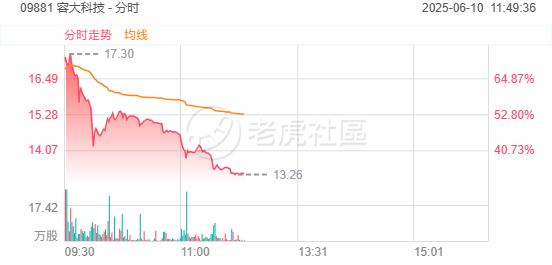
Today's listing of $RONGTA TECH(09881)$ and $NEWTREND GROUP(02573)$ are typical of the set back.
Definition and core logic of set back
Set-back refers to the mechanism whereby the issuer (listed company, sponsor) takes advantage of the special provisions in the Hong Kong IPO rules to artificially depress the allocation ratio of retail investors and retain more shares in the hands of institutions, thus creating a concentration of chips and facilitating market control.Its core logic lies:
Rule loophole: When the international placement (institutional) is not fully subscribed (e.g. 0.95-0.99 times) and the public offering (retail) is oversubscribed by ≥15 times, the special callback provision is triggered, and the proportion of the public allocation is compressed to 10%-20% (the normal callback should be 30%-50%).
Game of interest: Institutions operate through the combination of "national allotment shortfall + lower pricing limit" to reduce the number of shares allotted to retail investors and retain more chips, so as to facilitate arbitrage by raising the share price after listing.
Impact: For retail investors, on the one hand, the winning rate will plummet due to the low callback ratio; on the other hand, although the stock price may rise in the early stage of listing due to the banker's control of the market, it is difficult for retail investors to predict in advance!
Operation Mechanism of Set-Aside Callback
Regular dial back: under normal circumstances, the initial ratio of public offer to international placing is 1:9, the higher the oversubscription multiple, the larger the public allocation ratio, for example:
15-50 times of public allocation → dial back to 30
50-100 times public match → 40% of the total amount of the callback
Public Allotment ≥100 times → Callback to 50%
However, there is a special callback
Trigger condition: less than 1 times subscribed by national allocation (e.g. 0.99 times) + over-subscribed by public allocation ≥ 15 times → trigger special terms, public allocation ratio is pressed to less than 20%
Simultaneous pricing at the lower limit: usually priced at the lower limit of the prospectus price range to lower the issuance cost and reserve space for pull-ups
Key Indicators of Setbacks
National allocation subscription multiple <1: 0.95-0.99x (close to full but not enough, possibly artificial)
Pricing strategy: favoring lower bound pricing
Winning rate: less than 20%, highly concentrated chips
Typical case
$WUHAN YOUJI(02881)$ 0.93 times national allocation, 337 times over-allotment, 17.79% callback, 72% surge in the dark market
$BRETON(01333)$ 0.92 times national allocation, 198 times over-allotment, 20% callback, 2% one lot winning rate, 43% surge in the dark market
$JIANGSU HORIZON(02625)$ National allocation 0.93 times, public allocation overbought 47 times, callback only 16.6%, one lot winning rate of 3.91%, dark market plummeted after closing flat
$MIRXES-B(02629)$ National allocation 0.98 times, public allocation overbought 25.82 times, callback ratio of only 12.6%, a lot winning rate of 95%, the first day of 28.76% up
$RONGTA TECH(09881)$ National allocation 0.98 times, public allocation 276 times oversubscribed, lower limit pricing of $10, callback ratio of only 13.2%, one lot winning rate of 6%, the dark market surge of 76
$NEWTREND GROUP(02573)$ country allocation 0.95 times, public allocation overbought 131 times, the lower limit pricing of $ 18.9, a lot of the winning rate of 10%, the dark market soared 72%!
Certainly need to be wary of the following.
Public allocation oversubscription <15 times + insufficient national allocation → may be malicious callback (may plunge on the first day), and at the same time no cornerstone investor or low cornerstone ratio → large post-IPO selling pressure
Should I participate in the hedge callback?
Actually, the initiative on this question does not lie with retail investors.
At the prospectus stage of an IPO, neither the ordinary investor nor the bookrunner responsible for managing it can determine in advance whether or not a set-back will occur.The decision to hedge can not be made on the basis of known information during the prospectus period, but rather on the basis of the actual state of the market on the subscription of the new shares to dynamic judgment, generally until the end of the public offering, a combination of various aspects of the subscription situation, before the final decision on whether to use the hedge dialing back.
Participate in the set of callback profit, mainly ate the liquidity premium (pre chip concentration), but will face the risk of plummeting when the sell-off.
Really high quality and reliable new shares, by virtue of their own strength and reasonable pricing to the market, will rarely be used to "set the dial back" this kind of operation.Most of the stocks that are susceptible to this practice are not fundamentally sound and have little value in their own right.To put it euphemistically, it is to pick those stocks with poor fundamentals and take a chance on them like gambling, expecting to profit from the rise in share price brought about by the "set of dialing back". For example, the article mentioned Rongda Technology, new Qi'an, etc. may belong to this kind of fundamentals are not high quality, but because of the "set of reversal" in the dark market has a better performance of the stock.
Comments