This week's tech market has hidden a lot of structural variability in the midst of overall moderation.From the macro to the plate, to the company's fundamentals, multiple dimensions intertwined the current complex and full of opportunities.
First, the macro risk is rising: tariff game resurfaces
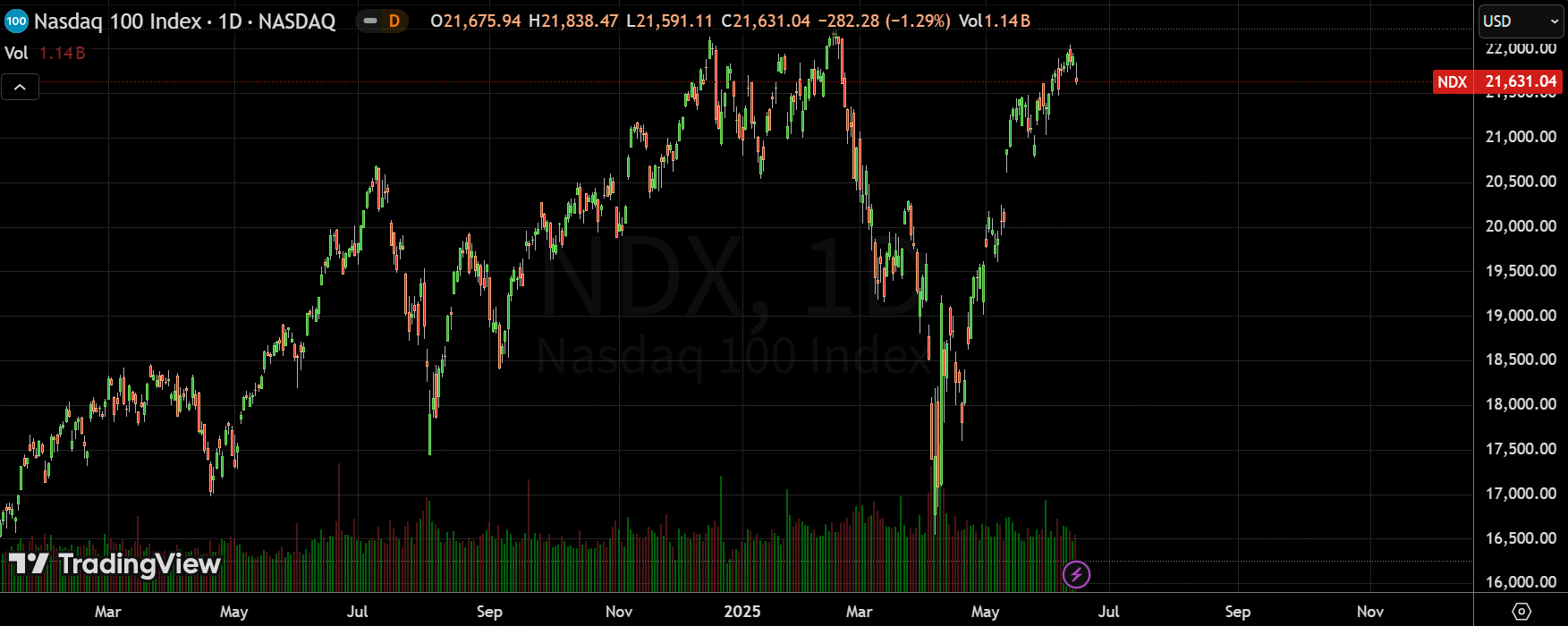
While the military tension between Israel and Iran has not subsided, a new round of tariff negotiations between the US and Vietnam has become the focus of recent market attention.Bloomberg reported that the U.S. is proposing to impose 20-25% tariffs on Vietnam's exports, significantly higher than the 10% range previously expected by the market.Tariff risk has re-emerged as a major variable weighing on risk appetite as the July 9 deadline for negotiations approaches.
Over the past few weeks, market capital allocation generally boosted net long positions on optimistic tariff expectations.However, with the narrowing of the time window, some investors began to take the initiative to lower their positions, take profits and move to a wait-and-see situation.Although the overall still maintain a bias, but the short-term trading mentality tends to be cautious.
Second, the structural differentiation of science and technology stocks intensified: the winner is always strong, SaaS pressure
The overall trend of the technology sector is still stable, but the trend of differentiation within the sector is becoming more and more obvious.Especially in the software sector, AI benefit logic has become the main line:
First tier (high certainty AI beneficiary stocks): $Microsoft (MSFT)$, $Cloudflare, Inc.(NET)$, $Snowflake (SNOW)$, $Palantir Technologies Inc.(PLTR)$, all have been in the AI landing application to form a real revenue contribution.
Tier 2 (transformational potential): $SAP SE (SAP)$, $ServiceNow (NOW)$, $Oracle (ORCL)$; of which ORCL has been elevated to Tier 1 after its latest earnings report, and $Datadog (DDOG)$ has been included in Tier 2 as well.
However, the SaaS industry is facing a new round of pressure to transform its model, with AI agents undermining the traditional per-seat subscription model, and organic growth likely to remain subdued if it fails to quickly open up new application loads or raise prices, with some of the large SaaS vendors already signaling single-digit growth rates.This transformation has not yet found a clear path to balance.
Third, the semiconductor: Micron (MU) into the "security AI beta" core standard
Semiconductor plate continued AI-driven market, in which the supply and demand in the field of memory chips further tightened:
$ Micron Technology (MU)$ has raised DDR4 prices by 50%, with some spot offers rising by as much as 100%.Samsung's delayed capacity release due to consecutive HBM3E test failures has further strengthened Micron's pricing power.
HBM market is highly sensitive: xPU demand only slightly exceeds expectations, may trigger a serious shortage, HBM price negotiations are expected to continue until 2027.
Investment logic: DRAM boom rebound, Samsung supply disorders, AI server demand explosion, Micron Blackwell architecture to accelerate the advancement of the current minority of core long varieties with "safe high beta" attributes (semiconductor AI resilience ranked second only to $ CoreWeave, Inc.CRWV)$ ).
Fourth, the new logic of autonomous driving investment: Uber's medium- and long-term layout is taking shape
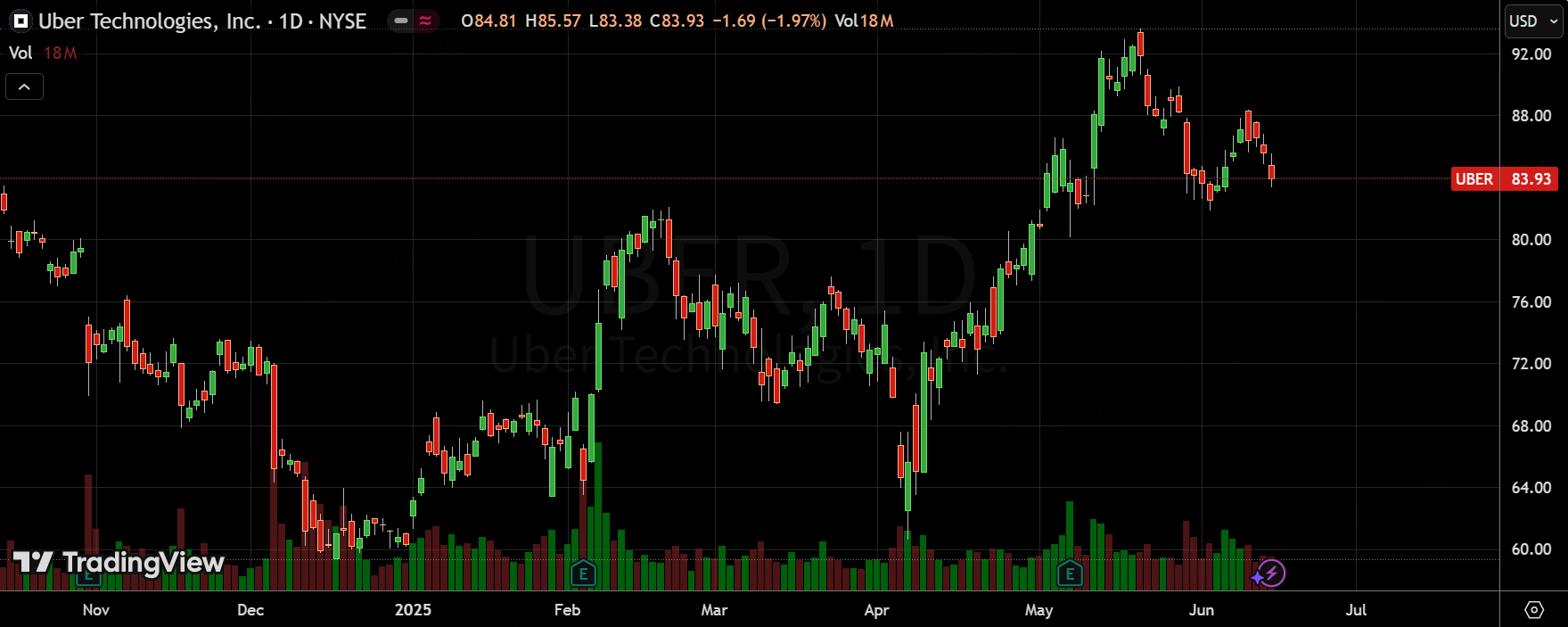
In the automatic driving track, Uber deepens its platform moat through cooperation with Waymo:
Short-term still losing money: such as Austin, Atlanta and other cities project current single car cost as high as 200,000 U.S. dollars, has not yet achieved break-even.
Medium-term improvement path: it is expected that the whole car cost will be reduced to $100,000 in 2027-28, the contract will be gradually re-signed, Waymo mileage fee will be reduced according to the city ladder, the fixed cost will be diluted with the expansion of the fleet, and the target pre-tax profit margin will be raised to 10% to be on a par with that of the manual drivers.
Platform value reinforcement: Uber can continue to fill the demand gap of peaks and valleys within the city week, forming a cross-city, cross-scenario high-utilization moat, and is an irreplaceable partner for Waymo and other AV vendors.
Although May has withdrawn from the long-term cognitive shift trading, in actively looking for a new round of long entry points, because its long-term logic is still solid, and EBITDA is expected to continue to be more than 20% high growth.
Fifth, AI hardware and Internet content: risks and opportunities coexist
AI hardware: cautious about MRVL's short-term volatility
- The market expects its FY26/FY27 custom AI chip business to contribute $2bn & $2.8bn revenue, and long-term TAM may be revised upward to $10bn.However, overall gross margin may be pressured to 58% as ASIC gross margin is lower than general-purpose GPU.
- Prefer $ Nvidia (NVDA) $, $ TSMC (TSM) $, $ Broadcom (AVGO) $, $ Celestial Science and Technology (CLS) $ and other fundamentally clear subjects, $ Mavell Technology (MRVL) $ is still "fuzzy story" camp.
Internet platform: PLTR and RDDT marginally improved
$Palantir Technologies Inc.(PLTR)$: Successful realization of the third technological breakthrough, superimposed on geopolitical risks, sentiment is expected to boost.
$Reddit (RDDT)$: proprietary data value gradually recognized by the market, short covering pressure to form a short-term upward momentum.
$Etsy, Inc.(ETSY)$, $Expedia(EXPE)$: by Temu and other competitive threats, weak data, short-term allocation of risk.
The advertising market as a whole is also showing signs of stabilization, with spending picking up in May, continuing the pace of repair since Q1.
This round of technology sector "pseudo-bull market" is turning into a new stage of structural bull market: fundamental stratification intensified, capital tends to have real AI landing scene of quality assets, weak story logic label risk premium rise.Position management, individual stock selection and logical rigor have become the core winners and losers in the current stage.
Comments